
In the Footsteps of St. Louis Marie de Montfort


"Footsteps Online"
Autumn 2005 (Volume 9, Issue 2)
Saint-Laurent-sur-Sèvre in English Literature
ANTHONY TROLLOPE is deservedly ranked among the great novelists of English Literature, with his great series of Barchester novels, among others. One of his lesser known works is a relatively short novel describing the resistance of the people of the "Vendée" - that area around Cholet, Saint-Laurent-sur-Sèvre and Bressuire in which St. Louis Marie worked in the last few years of his life - to the attempts of the French Revolution to change their religious practices and way of life. The book is called simply "La Vendée". It has often been claimed that the preaching of St. Louis Marie 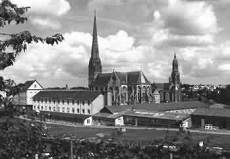 himself, some 75 or 80 years before, and of his successors, the members of the Company of Mary, after his death, was one of the strongest influences in inspiring this resistance of the people of the Vendée. Whatever we may think of that (and there are good reasons for hesitating to make too strong a claim), Trollope speaks highly, in his novel, of the part played by the Daughters of Wisdom of Saint-Laurent in caring for the injured and dying in the conflict. It is true that he speaks of "Sisters of Mercy", rather than "Daughters of Wisdom" - probably because both he and his readers were already familiar with the Sisters of Mercy, but had probably never heard of the Daughters of Wisdom - but it is clear which Sisters he has in mind. He writes:
"A kind of hospital was immediately opened at a little town called St. Laurent sur Sèvre, about two leagues from Durbellière, at which a convent of sisters of mercy had long been established… the sisters of the establishment cheerfully gave their time, their skill, and tenderest attention to assuage the miseries of their suffering countrymen… (The wards) were seldom, or rather never, empty as long as the Vendeans kept their position in the country, the sick and the wounded were nursed with the tenderest care at St. Laurent. The sisters who had commenced the task never remitted their zeal… the hospital of St. Laurent might have rivalled the cleanliness, care, and comfort of the Hotel Dieu in its present perfection."
High praise indeed for our Sisters from an unexpected quarter!
